

Branding for Small Businesses: Logo, Colours and Voice on a Budget
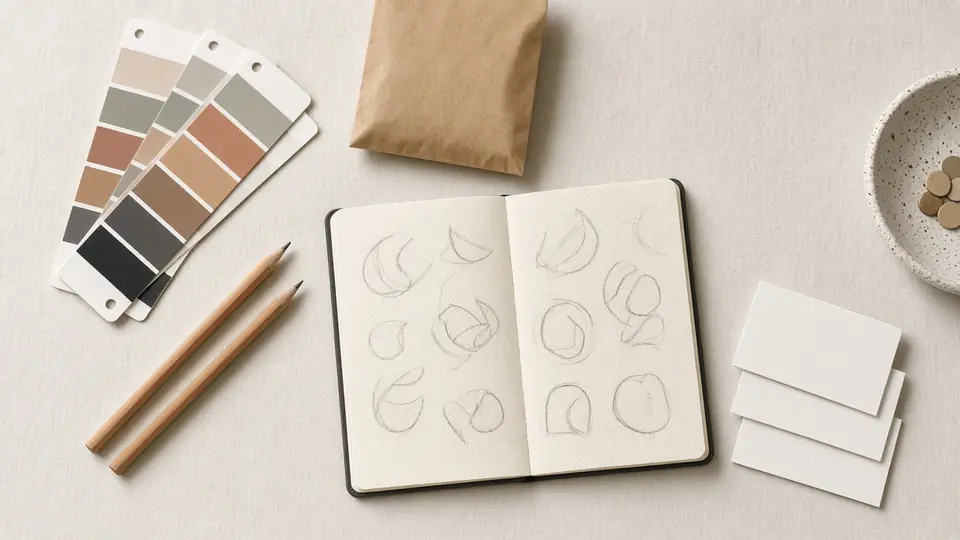
Ask most small business owners about branding and they will talk about their logo. A logo matters, but it is only one piece. Your brand is the overall impression people carry away after they see your shop board, scroll your Instagram, read your WhatsApp reply or open your parcel. Good branding for small business is about making that impression clear and consistent, and that does not require a big agency budget.
This guide covers the essentials: positioning, logo, colours, fonts and brand voice, plus a simple one-page guide to keep everything consistent. If you would like help with brand messaging and the content that carries it, see our content marketing service.
Start with positioning, not design
Before choosing a single colour, write short answers to these questions:
- Who do you serve? Be specific. "Working parents in Saravanampatti" is more useful than "everyone".
- What do you do better or differently? Faster turnaround, specialist skill, a family recipe, a guarantee.
- How do you want people to feel? Reassured, excited, looked after, impressed.
- Which three words should describe you? For example: reliable, warm, local.
These answers guide every design choice. A paediatric clinic and a gym in Peelamedu may both want to look "modern", but one should feel calm and safe while the other feels energetic.
Logo: what makes a usable small-business logo
A logo for a small business has to work in many places: a signboard, a WhatsApp profile picture, a printed bill, a delivery sticker and a website header. That means:
- Simple shapes that stay readable when shrunk to a small circle
- A version that works in one colour, for stamps, printing and dark backgrounds
- A horizontal version and a square or icon version
- Readable text, with the business name spelt clearly
- Original artwork, not a modified template or a copy of a bigger brand
Ask for final files in vector format (such as SVG or AI) as well as PNG, and make sure the files and their rights belong to your business.
Colours: pick a small palette
Two or three colours are enough for most small businesses:
- A main colour that people will remember you by
- A supporting colour for buttons, highlights and accents
- Neutral colours, such as white, off-white, grey or charcoal, for backgrounds and text
Note the exact colour codes (HEX for screens, CMYK for print) so your printer, web designer and social media designer all use the same shades. Check contrast too: light grey text on white may look elegant but is hard to read on a phone in bright sunlight.
Fonts and visual style
- Choose one font for headings and one for body text. Free, well-made fonts from libraries such as Google Fonts are fine for most businesses.
- If you communicate in Tamil as well, choose a Tamil font that sits comfortably beside your English font.
- Decide a photo style: real photos of your team, products and premises usually build more trust than stock images.
- Keep a few design templates for social posts, offers and announcements so everything looks related.
Brand voice: how you sound
Your voice is how your business talks in captions, website copy, replies and calls. Write down a few rules:
- Formal or friendly? A law firm and a café will answer the same question differently.
- Language mix: English, Tamil, Tanglish, or a mix depending on the channel. Many Coimbatore businesses use English on the website and a friendlier Tamil-English mix on Instagram and WhatsApp. That is fine, as long as it is a choice.
- Words you use and avoid: for example, say "consultation", not "sitting"; avoid overpromising words like "guaranteed" unless you truly guarantee something.
- Sample replies for common questions, so every staff member answers in the same tone.
Our post on content marketing ideas for small businesses shows how a consistent voice turns into regular content.
Put it on one page: your brand guide
You do not need a 50-page brand book. A single page, shared with everyone who designs or writes for you, is enough:
| Item | What to record |
|---|---|
| Logo | Main, icon and one-colour versions, with minimum size |
| Colours | Two or three colours with HEX and CMYK codes |
| Fonts | Heading and body fonts, English and Tamil |
| Photos | Style rules and examples |
| Voice | Three brand words, do's and don'ts, sample replies |
| Contact details | One phone number, email and address, written the same way everywhere |
Where consistency matters most
Customers notice mismatches. Check these places first:
- Shop signboard and visiting cards
- Google Business Profile: logo, cover photo, business name and description. Our Google Business Profile optimisation service covers this in detail.
- Website header, favicon and footer
- WhatsApp Business profile, catalogue and quick replies
- Instagram and Facebook profile pictures, highlights and post templates
- Packaging, bills and delivery stickers
Using the same business name, phone number and address everywhere also helps Google trust your local listing.
Example (illustrative, not a client result): A home bakery in Vadavalli might settle on a cream background, a deep maroon main colour, one rounded heading font and a warm, chatty voice in Tanglish on Instagram. Using the same three elements on its cake boxes, WhatsApp catalogue and Google profile makes the brand recognisable even before people read the name.
Budget-friendly ways to build your brand
- Do the thinking yourself. Positioning and voice cost nothing but time.
- Hire a designer for the logo only, and use free tools with your saved colours and fonts for daily posts.
- Create templates once and reuse them.
- Photograph your own work in good daylight rather than paying for stock images.
- Fix inconsistencies first before spending on new material.
When to hire help
Bring in professionals when you are launching a new business, rebranding after a change in direction, entering a new market, or when your materials look so inconsistent that customers seem confused. For ongoing social media design in your brand style, see our social media marketing service and our guide to social media marketing for small businesses.
Frequently asked questions
Is a logo the same as a brand?
No. The logo is a symbol. The brand is the full experience: how you look, sound and treat customers.
How often should a small business change its branding?
Rarely. Frequent changes confuse customers. Refresh only when the business itself changes or the current design no longer works across channels.
Can I use a free logo maker?
It can work for a very early-stage business, but check that the design is not used by many others and that you can get high-quality files.
Should my brand voice be in Tamil or English?
Use the language your customers use. Many local businesses use both, with clear rules for which channel uses which.
Want help with your brand voice and content?
We help small businesses put their brand into clear, consistent words and content. Visit our content marketing service page, call +91 8431921721 or write to info@xtrodinry.com.
About the author: Karthik N, Founder of Xtrodinry in Coimbatore and SEO strategist.
Xtrodinry · 4/175/A, Vijayalakshmi Nagar, Panappatti, Coimbatore, Tamil Nadu 641201 · +91 8431921721 · info@xtrodinry.com