

Digital Marketing for Textile Mills and Garment Exporters in Tiruppur and Coimbatore
Capability and compliance pages for overseas buyers, buyer-focused LinkedIn, country-targeted search and a separate track for your own brand.
A garment exporter's website is usually read by a sourcing manager in another country who is deciding whether to ask for samples. Our approach is to make that decision easy: clear capability, compliance and MOQ pages, a site written in the buyer's language, LinkedIn activity aimed at buyers and agents, and Google Ads only in the countries you can actually ship to. Selling your own brand to consumers is a separate track with its own pages.
This page sets out how Xtrodinry would plan marketing for knitwear exporters in Tiruppur, spinning and weaving mills around Coimbatore, and related units such as dyeing, printing and trims. We are a new agency and have not yet worked with a textile or garment business, so what follows is our planned approach, not a summary of past work. Facts about the cluster and the platforms are sourced at the end.
The scale of the cluster is why this matters. The Tiruppur Exporters' Association (TEA), set up in 1990, reports that Tiruppur's knitwear exports reached ₹44,747 crore in 2024–25. Most of that business is won through buyers, agents and trade fairs, so a website's job is to support those conversations rather than replace them.
Who looks you up, and what they need to see
Three groups usually visit an exporter's website, and each needs something different:
- Overseas buyers and brand sourcing teams check whether you can make their product category, at their quality level, in their volumes and on their timeline.
- Buying agents and sourcing offices want quick proof of capacity, compliance and contact details they can pass on.
- Domestic and D2C customers, if you also sell your own brand, want products, sizes and prices.
TEA itself lists helping foreign buyers locate suitable suppliers among its roles, which shows how much supplier discovery still runs through associations and referrals. A buyer who hears your name will look you up. The site has to answer their first questions in under a minute.
Capability, compliance and MOQ pages
We would build the site around the questions sourcing teams ask in their first email:
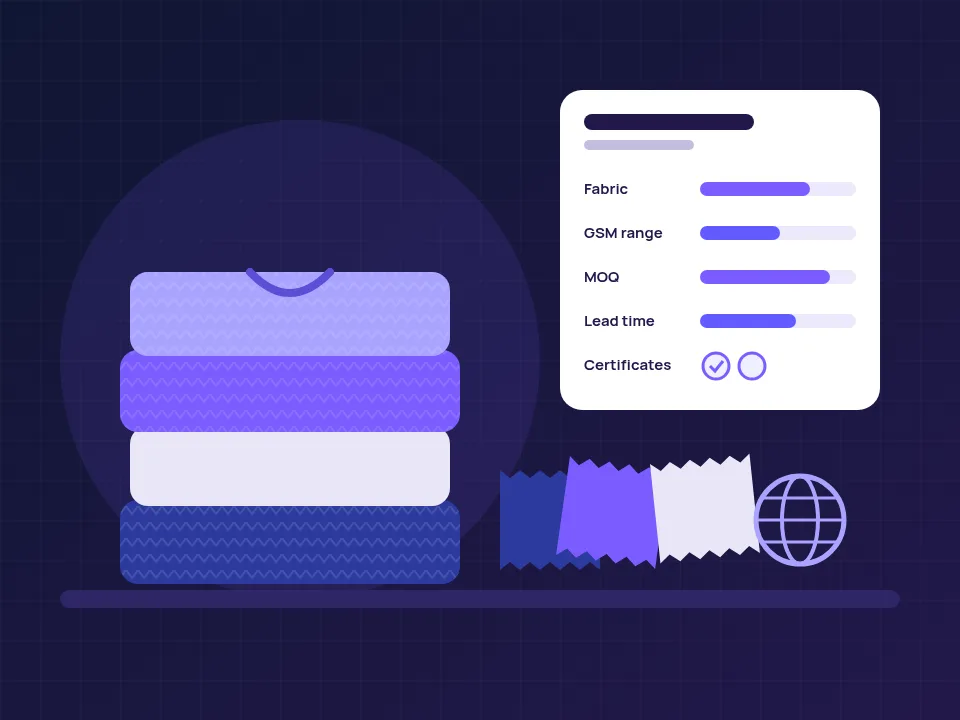
- Product capability: categories you make (for example tees, polos, sweatshirts, innerwear, kidswear), fabrics, GSM ranges and finishes, with your own product photos.
- Capacity and lead times: stated as ranges you can honour.
- Minimum order quantities: per style or colour, stated clearly so mismatched enquiries filter themselves out.
- Compliance and certifications: only the ones you actually hold, with certificate or licence numbers where the scheme allows checking. OEKO-TEX, for example, runs a public Label Check where anyone can enter a label number to confirm it is genuine, so careful buyers can and do verify claims.
- Factory and process: knitting, dyeing, cutting, sewing, quality checks, shown with real photos.
Each of these becomes its own section or page, written as text that search engines and AI assistants can read, not locked inside a brochure PDF.

Writing for overseas buyers: language and markets
Most buyers will read the site in English, and that is usually enough to start. If you target buyers in a particular non-English market, Google's guidance is to give each language version its own URL and connect them with hreflang annotations. Google also says it decides a page's language from the visible content, not from code tags, and that it ignores location meta tags. So a half-translated page or a hidden language tag does not help; a properly translated page does.
We would only suggest extra language versions once there is a clear market and someone who can answer enquiries in that language.

Our channel plan for exporters and mills, and what we would avoid
- Website first. Capability, compliance, MOQ and contact pages, plus enquiry tracking.
- LinkedIn for buyers and agents. A complete company page and regular posts from the founder or merchandising head about new fabrics, developments, certifications and fair participation. See LinkedIn marketing.
- Google Ads by country. Google Ads lets you target whole countries or regions, and recommends matching the ad language to the location. We would test small Search campaigns on manufacturer-and-product terms in your two or three main export markets.
- Trade fair support. Pre-fair announcements, a fair landing page, and a fast follow-up for every contact.
- D2C as a separate track, if you sell your own brand: product feeds, Shopping and Meta catalogue ads, covered on our e-commerce Google Ads and Meta ads for e-commerce pages.
What we would avoid: one site that mixes wholesale MOQs with consumer prices on the same pages, broad awareness campaigns aimed at consumers when the goal is export buyers, and any claim of certifications, buyer names or capacity you cannot document.
Associations and export bodies
Membership and activity in industry bodies help credibility and often bring buyer contacts. In Tiruppur, TEA represents knitwear exporters. Nationally, the Apparel Export Promotion Council (AEPC) runs export awards and organises Indian participation in international fairs. We would list genuine memberships on the site, link to your listing where one exists, and plan content around the fairs you attend.
Illustrative, not a client result: a capability summary block
A hypothetical knitwear exporter's homepage might open with a short block like this, followed by links to each detail page:
- We make: cotton and cotton-blend knit tops, polos and sweatshirts for men, women and children
- Fabrics: single jersey, pique, fleece; GSM range stated per fabric
- MOQ: stated per style and per colour
- Lead time: a range from approved sample to shipment
- Certifications: listed with numbers that buyers can verify
- Contact: merchandiser name, email and WhatsApp
These lines show structure only. A real page would use the exporter's own verified capacity, figures and certificates.
Questions exporters and mills ask about digital marketing
Partly. Trade fairs, agents and referrals still bring most first contacts. But buyers almost always look a supplier up before replying or visiting, and some do search for new suppliers by product and country. The website has to work for both.
They can share a domain, but they should not share pages. Wholesale buyers need MOQs, capability and compliance; consumers need products, sizes and prices. Mixing them confuses both. A separate section or subdomain for the brand usually works better.
Usually not at the start. English covers most sourcing teams. If one market becomes important and you can respond in that language, a properly translated version on its own URLs, connected with hreflang, is the right way to add it.
It can help, mainly by keeping your name in front of buyers and agents between fairs. Regular posts about new developments, certifications and capacity work better than generic promotional posts.
No. Xtrodinry is a new agency without textile clients or case studies. This page describes how we would approach the work. We agree measurable goals before any spend.
Want a plan for your export website?
Send us your current website or catalogue and your main export markets. Karthik will reply with a short written plan. There's no fee and no obligation. Contact Xtrodinry.
Sources and references
- About TEA: formed 1990; Tiruppur knitwear exports ₹44,747 crore in 2024–25 — Tiruppur Exporters' Association
- TEA vision: helping foreign buyers locate suitable suppliers — Tiruppur Exporters' Association
- Apparel Export Promotion Council — AEPC
- Managing multi-regional and multilingual sites — Google Search Central
- OEKO-TEX Label Check — OEKO-TEX
- Target ads to geographic locations — Google Ads Help